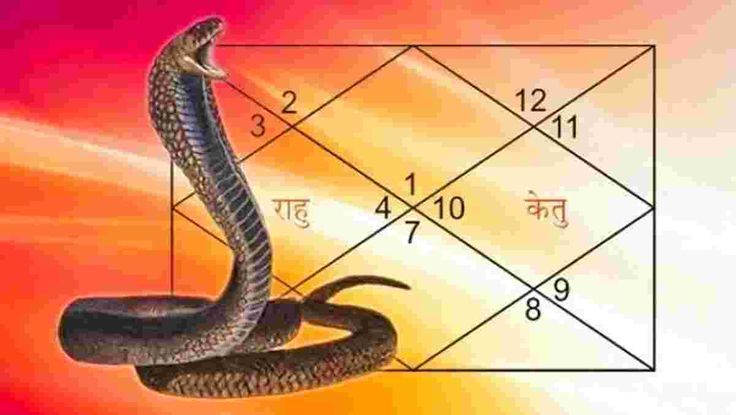
In the tapestry of Hindu traditions, Kumbh Vivah stands as a profound yet enigmatic ritual, weaving together spirituality, tradition, and societal beliefs. This sacred union, often shrouded in mystique, holds deep significance for those who undertake it. Let’s embark on a journey to unravel the intricacies of the Vivah, exploring its origins, rituals, and cultural reverberations.
Understanding Kumbh Vivah
The Essence of Kumbh Vivah
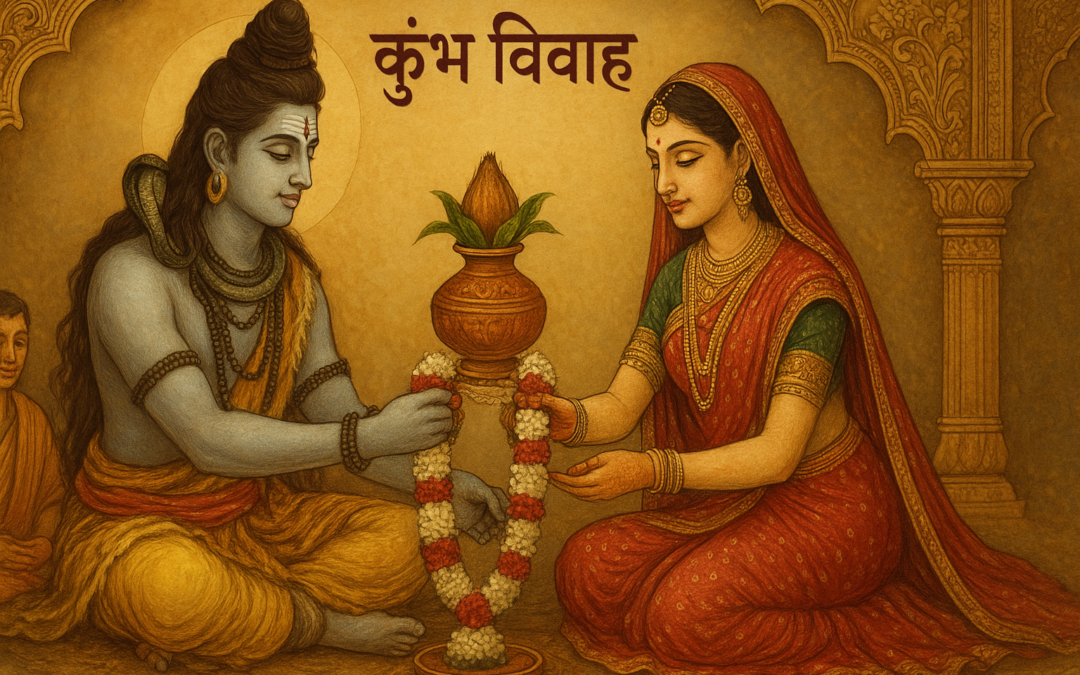
The Vivaha, a Sanskrit term meaning “pot marriage,” is a traditional Hindu practice where an individual, usually a woman, marries a peepal or banana tree before entering into a human marriage. This ritual is performed to ward off malefic planetary influences, particularly those associated with Manglik Dosha in astrology.
Origins and Mythological Significance
Legend has it that theVivaha finds its roots in the epic of Ramayana, where Lord Rama’s wife, Sita, was deemed to have a Manglik Dosha. To nullify its effects and ensure her marital bliss, she underwent the ceremonial marriage with a peepal tree. This act later paved the way for her harmonious union with Lord Rama.
Rituals and Ceremonies
The Vivah ceremony entails elaborate rituals conducted by a priest, mirroring the solemnity of a human marriage. The bride dresses in traditional attire, adorned with auspicious symbols and jewelry. Mantras are chanted, and sacred offerings are made to invoke divine blessings. The marriage is consummated symbolically, signifying the breaking of the Manglik Dosha.
Spiritual Significance
Beyond its astrological implications, the Vivaha holds deep spiritual significance. It is believed to cleanse the individual of past karmic debts and bestow spiritual purification. The act of marrying a tree is symbolic of the union between the individual’s soul and the divine, fostering spiritual growth and harmony.
The Cultural Impact of Kumbh Vivah
Societal Perceptions and Traditions
In traditional Hindu society, the Vivaha is regarded as a remedial measure for those afflicted by Manglik Dosha. Families often arrange these marriages to ensure the future marital happiness and well-being of their loved ones. Despite modern advancements, this age-old tradition continues to hold sway in many communities, reflecting the enduring influence of ancient beliefs.
Contemporary Perspectives and Adaptations
In recent times, there has been a shift in attitudes towards the Vivaha, with some questioning its relevance in the modern era. However, for many individuals grappling with astrological dilemmas, it remains a beacon of hope and solace. Some couples choose to undergo the ritual as a precautionary measure, seeking to mitigate any potential challenges in their marital journey.
Symbolism and Allegory
Beyond its practical implications, the Vivah serves as a potent symbol of resilience and faith. It embodies the belief in the transformative power of rituals and the enduring quest for spiritual harmony. Through this ancient practice, individuals find solace in the embrace of tradition, forging a deeper connection with their cultural heritage.
Conclusion
In the tapestry of Hindu traditions, Kumbh Vivah stands as a poignant testament to the enduring interplay between faith, tradition, and spirituality. Through its rituals and symbolism, it offers solace and hope to those navigating the complexities of human relationships. As we delve into its mysteries, we discover not just a ritual, but a profound journey of the soul towards union and harmony. Contact Pandit Shivesh ji Maharaj for vivah and for kaal sarp dosh puja who has more than 25 years of experience in the field.
FAQs (Frequently Asked Questions):
What is Manglik Dosha, and how does it relate to Kumbh Vivah?
Manglik Dosha is an astrological condition caused by the planet Mars, which is believed to bring discord and challenges in marital life. The Vivaha is performed to nullify its effects and ensure marital harmony.
Is Kumbh Vivah still practised widely in contemporary Hindu society?
While the prevalence of the Vivaha varies across regions, it continues to hold significance in many traditional Hindu communities, particularly among those adhering to astrological beliefs.
Can Kumbh Vivah be performed for both men and women?
While the Vivah is predominantly associated with women, men afflicted by Manglik Dosha may also opt for this ritual as a remedial measure.
How does Kumbh Vivah contribute to spiritual growth and purification?
The Vivah is believed to cleanse the individual of past karmic debts and bestow spiritual purification, fostering inner harmony and growth.
Are there variations in the rituals of Kumbh Vivah across different regions?
Yes, the specific rituals and customs associated with the Vivah may vary based on regional traditions and cultural practices.
Is Kumbh Vivah mandatory for individuals with Manglik Dosha, or are there alternative remedies?
While the Vivah is considered an effective remedy for Manglik Dosha, individuals may explore alternative astrological remedies based on their beliefs and preferences.
Narayan Nagbali Puja, a venerable Hindu ritual, holds deep-rooted significance for those seeking spiritual solace and ancestral liberation. Rooted in ancient scriptures, this ritual encompasses profound ceremonies aimed at appeasing departed souls and fostering harmony in one’s life. In this comprehensive guide, we delve into the essence of Nagbali Puja, exploring its rituals, significance, and transformative potential.
Unravelling the Essence of Narayan Nagbali Puja
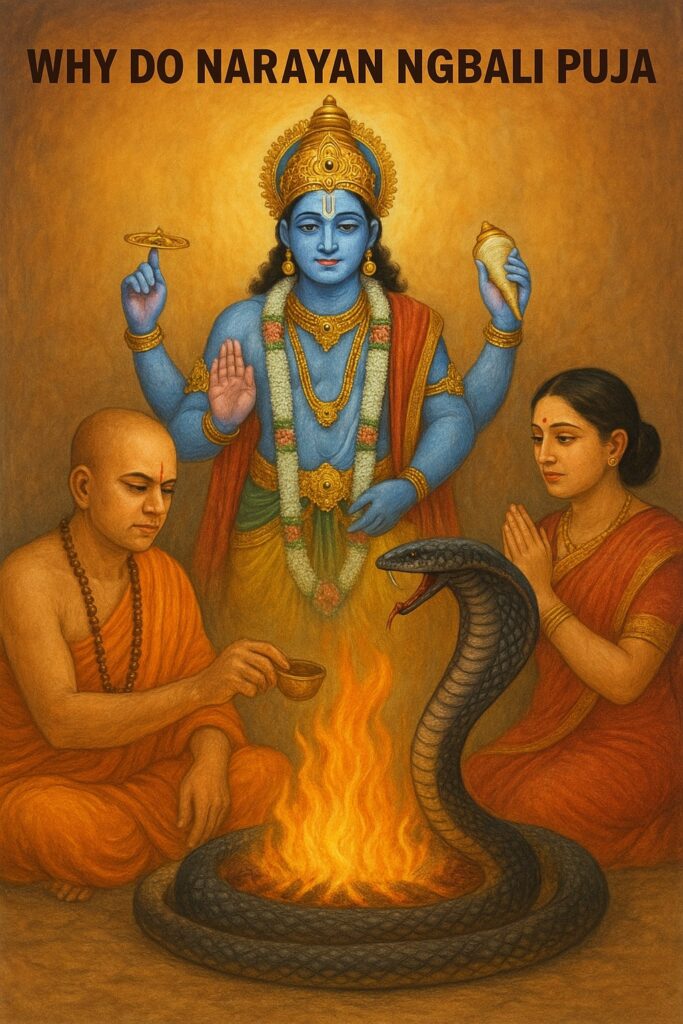
Nagbali Puja, a confluence of two distinct rituals – Narayan Bali and Nag Bali, is performed to seek redemption for the souls of ancestors who may have died under unnatural or unfortunate circumstances. This sacred observance is believed to free the departed souls from earthly attachments, allowing them to attain salvation.
Understanding Narayan Bali Ritual
Narayan Bali is performed to absolve the soul of a person who has met with an untimely death or suffered from a prolonged illness. The ritual involves invoking Lord Vishnu’s blessings and offering prayers for the departed soul’s peaceful transition to the afterlife.
Significance of Narayan Bali
Narayan Bali holds immense significance in Hinduism, as it is believed to cleanse the soul of any lingering karmic debts, facilitating its journey towards liberation. By performing this ritual, devotees seek to alleviate the suffering of their ancestors and ensure their eternal peace.
Exploring Nag Bali Ceremony
Nag Bali, on the other hand, is conducted to pacify the souls of individuals who have been victims of snake bites or have killed snakes in their past lives. This ritual aims to appease the Nag Devatas (serpent deities) and seek forgiveness for any harm caused to them in previous incarnations.
The Symbolism of Nag Bali
In Hindu mythology, snakes hold a prominent place, symbolizing both benevolence and malevolence. Nag Bali seeks to honour these mystical creatures and restore harmony between humans and Nag Devatas, fostering a sense of reverence for all living beings.
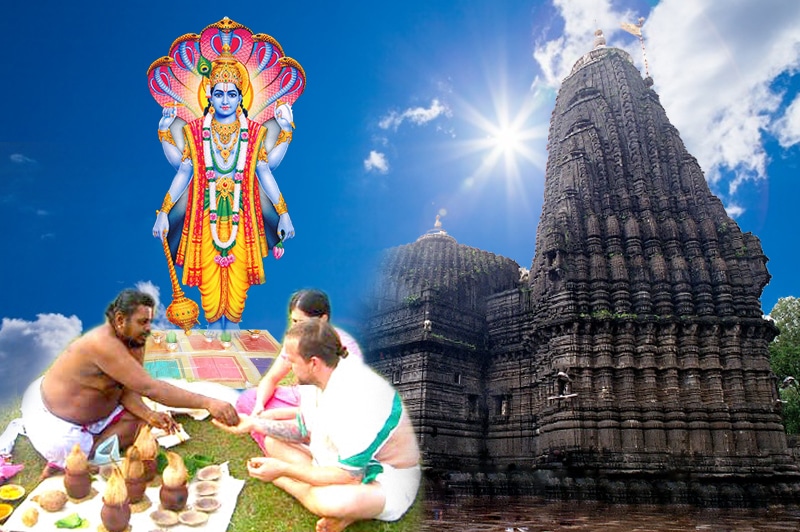
Nagbali Puja entails a series of intricate rituals conducted by knowledgeable priests in accordance with Vedic scriptures. The ceremonies typically span over several days and involve elaborate offerings, prayers, and homas (fire rituals) aimed at appeasing the departed souls and invoking divine blessings.
Day 1: Purification and Invocation
The first day of the puja is dedicated to purifying the sacred space and invoking the blessings of Lord Vishnu and the Nag Devatas. The rituals begin with the lighting of holy lamps and the chanting of Vedic mantras to sanctify the surroundings.
Day 2: Narayan Bali Ritual
On the second day, the Narayan Bali ritual takes centre stage, as devotees offer oblations to the departed souls and seek their forgiveness. The priest performs elaborate ceremonies, including pind daan (offering of rice balls) and tarpan (libation), to honour the ancestors and alleviate their suffering.
Day 3: Nag Bali Ceremony
The final day of the puja is dedicated to the Nag Bali ceremony, wherein prayers are offered to appease the Nag Devatas and seek their blessings. Devotees make offerings of milk, ghee, and honey to the serpent deities, symbolizing reverence and gratitude towards nature’s guardians.
The Spiritual Significance
Narayan Nagbali Puja holds profound spiritual significance for those seeking redemption for their ancestors and liberation from the cycle of birth and death. By performing this sacred ritual with utmost devotion and sincerity, devotees believe they can transcend worldly attachments and attain spiritual enlightenment.
Benefits of Narayan Nagbali Puja
Ancestral Healing: The puja helps alleviate the suffering of departed souls and ensures their smooth transition to the afterlife.
Karmic Cleansing: By performing rituals like Narayan Bali and Nag Bali, individuals can absolve themselves of past karmic debts and attain spiritual liberation.
Family Harmony: Nagbali Puja fosters familial unity and harmony by honouring ancestral lineage and seeking blessings for the entire family.
Conclusion
Narayan Nagbali Puja stands as a sacred testament to the enduring bonds between the living and the departed. Through its profound rituals and ceremonies, this ancient practice offers solace to troubled souls, fosters familial harmony, and paves the way for spiritual enlightenment. Embrace the transformative power of Nagbali Puja and embark on a journey towards ancestral healing and inner peace. Best pandit for Nagbali puja contact pandit Shivesh ji Maharaj for better results
Frequently Asked Questions (FAQs):
What is the significance of Narayan Nagbali Puja?
Nagbali Puja holds immense significance for ancestral healing and spiritual liberation. It helps appease departed souls and cleanse karmic debts, fostering harmony and prosperity in one’s life.
Who can perform Narayan Nagbali Puja?
Nagbali Puja can be performed by anyone seeking ancestral healing and spiritual upliftment. It is typically conducted by knowledgeable priests who specialize in Vedic rituals.
How often should Narayan Nagbali Puja be performed?
The frequency of Nagbali Puja depends on individual circumstances and spiritual beliefs. Some people may perform it annually, while others may do so on specific occasions or as guided by a priest.
What preparations are required for Nagbali Puja?
Prior preparations for Nagbali Puja include arranging the necessary ingredients, selecting an auspicious date, and consulting with a knowledgeable priest to ensure the rituals are performed correctly.
Can Narayan Nagbali Puja be performed remotely?
Yes, Nagbali Puja can be performed remotely with the assistance of a qualified priest who conducts the rituals on behalf of the devotee. Virtual participation allows individuals to observe the puja from any location.
What are the expected outcomes of Narayan Nagbali Puja?
The outcomes of Nagbali Puja may vary for each individual, but commonly include ancestral healing, spiritual upliftment, and the attainment of peace and prosperity in one’s life.
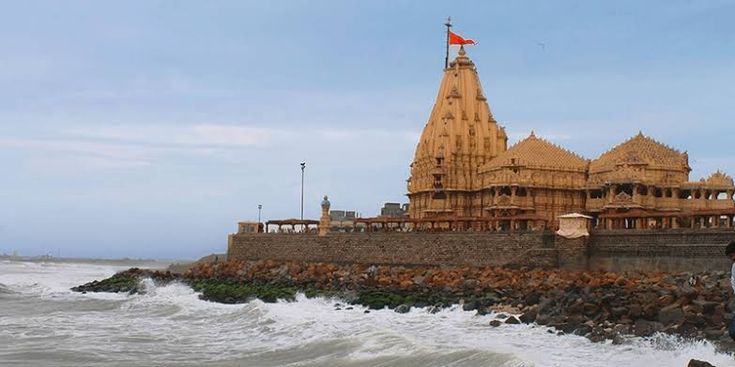
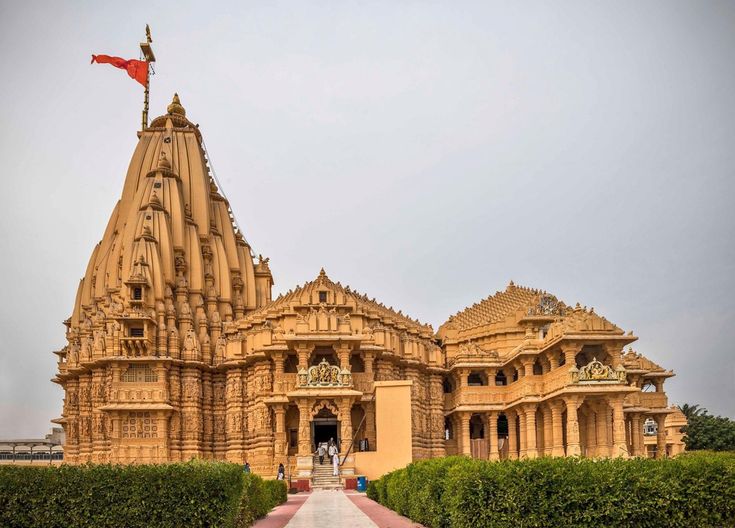
The Somnath Temple, a symbol of India’s rich cultural and spiritual heritage, stands as a testament to the enduring faith and resilience of its devotees. Located on the western coast of Gujarat, this temple is one of the twelve Jyotirlinga shrines dedicated to Lord Shiva, making it a crucial pilgrimage site for millions of Hindus.
Geographical Information
Location
Somnath Temple is situated in Prabhas Patan near Veraval in Saurashtra, Gujarat. It is strategically located on the Arabian Sea’s coast, offering a serene and picturesque backdrop that enhances its spiritual ambience.
Climate
The climate in Somnath is typically tropical, with hot summers, moderate monsoons, and mild winters. The best time to visit is from October to March when the weather is most pleasant for sightseeing and pilgrimage.
Best Times to Visit
Visitors often prefer the cooler months from October to March. The temple also sees significant crowds during festivals like Mahashivaratri and Kartik Purnima.
Historical Context
Early History
The Somnath Temple has a history that dates back thousands of years. It is believed to have been originally built by the Moon God, Soma, in gold, then rebuilt by Ravana in silver, and later by Lord Krishna in wood.
Medieval Period
The temple faced multiple destructions and reconstructions throughout the medieval period. It was first destroyed by Mahmud of Ghazni in 1024 AD and subsequently rebuilt several times by various Hindu kings.
Modern Era
In the modern era, the temple was reconstructed in its current form in 1951 under the guidance of Sardar Vallabhbhai Patel. The new structure reflects the Chalukya style of architecture and stands as a beacon of resilience and devotion.
Architectural Splendor
Chalukya Style
The temple is a brilliant example of Chalukya architecture, characterized by intricate carvings, grandiose pillars, and a magnificent shikhara (spire).
Main Features
Shikhar
The main spire of the temple rises to a height of 155 feet and is adorned with a Kalash (pot-like structure) weighing 10 tons.
Mandap
The mandap (assembly hall) is spacious and decorated with exquisite carvings depicting various deities and mythological scenes.
Garbhagriha
The innermost sanctum, or garbhagriha, houses the sacred Jyotirlinga, which is the focal point of worship.
Unique Elements
Bāṇastambha
The temple features the Bāṇastambha, an arrow pillar, which is believed to mark the first point on earth that received the light from the sun.
Cultural Insights
Religious Significance
Somnath is revered as one of the twelve Jyotirlingas, which are considered to be the most sacred abodes of Lord Shiva. Each Jyotirlinga is believed to be a manifestation of Shiva, and visiting all twelve is a significant spiritual journey for many Hindus.
Festivals
The temple is a vibrant hub during festivals like Mahashivaratri, which celebrates the divine marriage of Shiva and Parvati, and Kartik Purnima, which marks the manifestation of Lord Shiva as a Jyotirlinga.
Local Customs
Visitors are expected to adhere to traditional customs, such as removing shoes before entering the temple and dressing modestly. Devotees often perform rituals like abhishekam (anointment) and offer flowers and fruits to the deity.
Must-Visit Attractions
Nearby Temples
Bhalka Tirtha
Bhalka Tirtha is another significant site near Somnath, where Lord Krishna is believed to have been shot by a hunter and eventually left his earthly form.
Triveni Sangam
This is the confluence of three rivers – Hiran, Kapila, and Saraswati – and is considered a holy spot for performing rituals for deceased ancestors.
Somnath Museum
The museum near the temple offers a glimpse into the rich history and artefacts related to the temple’s numerous reconstructions.
Activities and Experiences
Spiritual Ceremonies
Participating in the daily aarti and other rituals offers a deeply spiritual experience. The evening aarti, in particular, is a mesmerizing event with its blend of chants, music, and devotion.
Light and Sound Show
The temple hosts a spectacular light and sound show in the evening, narrating the history and legends of Somnath in an engaging manner.
Beach Walks
The nearby Somnath beach provides a serene setting for leisurely walks and reflection, enhancing the overall spiritual experience of the visit.
Travel Tips
Accommodation
There are various options ranging from budget hotels to more comfortable accommodations close to the temple. It’s advisable to book in advance, especially during peak pilgrimage seasons.
Transport
Somnath is well-connected by road and rail. The nearest airport is in Diu, approximately 63 km away. Regular buses and taxis are available from major cities in Gujarat.
Packing Essentials
Visitors should pack light cotton clothes for the day and warmer attire for the evenings during the winter months. Comfortable footwear is essential for walking around the temple complex and nearby attractions.
Safety and Health Precautions
General Safety
Somnath is a safe destination, but like any tourist spot, it’s wise to stay aware of your surroundings and keep your belongings secure.
Health Tips
Carry basic medications, stay hydrated, and protect yourself from the sun with hats and sunscreen. Be cautious of street food if you have a sensitive stomach.
Budget Planning
Travel Costs
Budget travelers can manage with local transport and affordable lodging, while those seeking comfort can opt for mid-range to luxury accommodations.
Food and Dining
There are numerous dining options ranging from local dhabas to more upscale restaurants offering Gujarati thalis and other Indian cuisines.
Entry Fees
The temple does not charge an entry fee, but donations are welcome. Additional costs may include special pujas and the light and sound show tickets.
Local Cuisine
Must-Try Dishes
While in Somnath, indulge in traditional Gujarati dishes like dhokla, thepla, and khandvi. Seafood lovers can enjoy fresh catches from the Arabian Sea.
Dining Recommendations
Some recommended places include the temple’s own dining hall for Prasad meals and local eateries around the temple complex for authentic Gujarati flavours.
Conclusion
The Somnath Temple is not just a site of architectural brilliance and historical significance but also a spiritual haven that offers a profound sense of peace and divinity. Whether you are a pilgrim or a tourist, the temple and its surroundings promise a rich and fulfilling experience.
Frequently Asked Questions about Somnath Temple:
What is the significance of the Somnath Temple?
The Somnath Temple is one of the twelve Jyotirlinga shrines dedicated to Lord Shiva, making it one of the most revered pilgrimage sites for Hindus. It symbolizes resilience and spiritual devotion, having been reconstructed multiple times throughout history.
Where is Somnath Temple located?
The Somnath Temple is located in Prabhas Patan near Veraval in the Saurashtra region of Gujarat, India. It is situated on the western coast of India along the Arabian Sea.
What are the best times to visit Somnath Temple?
The best time to visit Somnath Temple is between October and March when the weather is cooler and more pleasant. Festivals like Mahashivaratri and Kartik Purnima also attract large crowds and offer a vibrant cultural experience.
How can I reach Somnath Temple?
Somnath is well-connected by road and rail. The nearest airport is in Diu, which is approximately 63 km away. Regular buses and taxis are available from major cities in Gujarat to Somnath.
What is the historical significance of Somnath Temple?
The temple has a rich history dating back thousands of years and has been destroyed and rebuilt several times. It was first destroyed by Mahmud of Ghazni in 1024 AD and has since been rebuilt by various Hindu kings and finally in its current form in 1951.
What architectural style is Somnath Temple built in?
The Somnath Temple is built in the Chalukya style of architecture, characterized by intricate carvings, grand pillars, and a magnificent shikhara (spire).
Are there any special rituals or ceremonies at the temple?
Yes, the temple hosts several daily rituals and ceremonies, including the aarti (prayer) sessions. The evening aarti, in particular, is a significant spiritual event accompanied by chants and music.
Is there an entry fee for visiting Somnath Temple?
No, there is no entry fee for visiting the Somnath Temple. However, donations are welcome, and there may be charges for special pujas and the light and sound show.
What are some nearby attractions to visit?
Nearby attractions include Bhalka Tirtha, where Lord Krishna is believed to have been shot by a hunter, and Triveni Sangam, the confluence of three holy rivers. The Somnath Museum is also worth a visit for those interested in the temple’s history.
What kind of accommodations are available near Somnath Temple?
There are various accommodation options near Somnath Temple, ranging from budget hotels to more comfortable mid-range and luxury options. It is advisable to book in advance during peak seasons and festivals.
What should I pack for a trip to Somnath Temple?
Pack light cotton clothes for the day and warmer attire for the evenings during the winter months. Comfortable footwear is essential for walking around the temple complex and nearby attractions. Also, carry essentials like hats, sunscreen, and basic medications.
Can I participate in the temple’s rituals as a visitor?
Yes, visitors can participate in the temple’s rituals. It’s a common practice to join the aarti sessions and other ceremonial activities. Ensure to follow temple customs such as removing shoes and dressing modestly.
What kind of food can I expect near the temple?
You can find a variety of food options ranging from traditional Gujarati dishes like dhokla, thepla, and khandvi to seafood. There are local eateries around the temple complex and the temple’s own dining hall for prasad meals.
Is the Somnath Temple wheelchair accessible?
The temple has made efforts to accommodate all visitors, including those with mobility issues. It’s advisable to check with the temple authorities for specific accessibility features and assistance.
Are there any special festivals celebrated at Somnath Temple?
Yes, major festivals like Mahashivaratri and Kartik Purnima are celebrated with great fervor at Somnath Temple. These festivals attract large crowds and involve special rituals and cultural events.
Can I take photographs inside the Somnath Temple?
Photography is generally not allowed inside the temple premises to maintain the sanctity of the space. However, you can take photographs of the temple exteriors and the surrounding areas.
What are the safety and health precautions I should take while visiting?
Stay hydrated, protect yourself from the sun with hats and sunscreen, and be cautious with street food if you have a sensitive stomach. Keep your belongings secure and stay aware of your surroundings as you would in any tourist area.
How can I learn more about the history and significance of Somnath Temple?
Visiting the Somnath Museum, participating in the light and sound show, and reading literature available at the temple can provide deeper insights into the temple’s rich history and significance.
Are there any guided tours available?
Yes, guided tours are available which can enhance your understanding of the temple’s history, architecture, and cultural importance. It’s advisable to check with the temple administration or local tour operators for details.
Can I buy souvenirs near Somnath Temple?
There are several shops around the temple complex where you can buy souvenirs, religious artifacts, and local handicrafts to commemorate your visit.
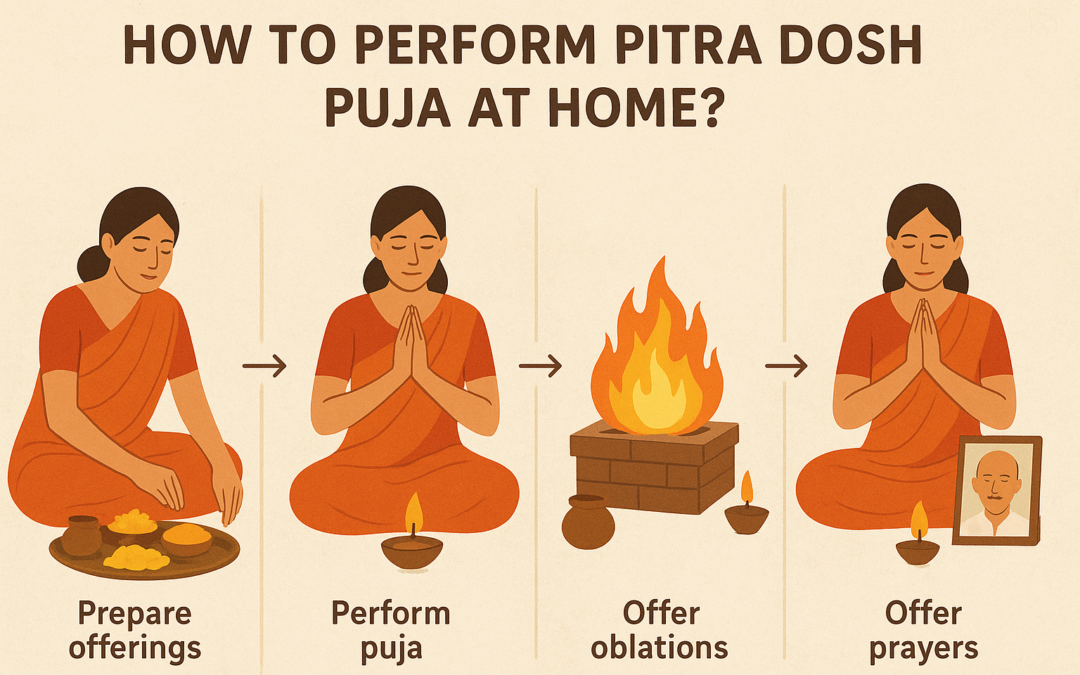
How to perform Pitra Dosh puja at home is an astrological condition that occurs due to the karmic deeds of one’s ancestors, which adversely affect the descendants. In Vedic astrology, it is believed that Pitra Dosh manifests when the souls of ancestors are not at peace and seek liberation.
Importance of Pitra Dosh Puja
How to perform Pitra Dosh Puja at home is crucial for mitigating the negative effects associated with this dosh. It helps in appeasing the ancestors, ensuring their blessings for the well-being and prosperity of the family.
Overview of the Article
This article provides a detailed guide on how to perform Pitra Dosh Puja at home. It covers the significance, rituals, materials needed, and a step-by-step process, ensuring that even those new to this practice can perform it effectively.
Understanding Pitra Dosh
What is Pitra Dosh?
Pitra Dosh is an astrological flaw that signifies the unrest of ancestors’ souls. It is believed to occur due to unfulfilled desires or improper rituals performed by deceased ancestors.
Causes of Pitra Dosh
Pitra Dosh can arise from various factors, including the lack of proper rituals for ancestors, their unfulfilled desires, and negative karmic deeds carried over generations.
Effects of Pitra Dosh on Individuals and Families
Individuals and families affected by Pitra Dosh may experience chronic health issues, financial instability, relationship problems, and a general lack of peace and prosperity.
Significance of Pitra Dosh Puja
sources:https://www.shaligram.com/
Importance in Hindu Culture
In Hindu culture, honouring ancestors is a sacred duty. Pitra Dosh Puja is performed to seek forgiveness and blessings from the departed souls, ensuring their peaceful transition and the family’s overall well-being.
Spiritual Benefits
Performing this puja brings spiritual upliftment by purifying the karmic debts and enhancing one’s spiritual growth. It fosters a connection between the living and the departed.
Familial Harmony and Prosperity
How to perform Pitra Dosh Puja at home helps resolve family disputes, improve relationships, and bring prosperity by removing the negative energies associated with Pitra Dosh.
Types of Pitra Dosh
Pitra Dosh Due to Natural Causes
This type of Pitra Dosh occurs due to the natural death of ancestors without proper rituals being performed.
Pitra Dosh Due to Unnatural Causes
When ancestors meet an untimely or unnatural death, their souls may remain restless, causing this type of Pitra Dosh.
Pitra Dosh Based on Planetary Positions
Astrological configurations, such as the positioning of Rahu and Ketu in one’s horoscope, can indicate the presence of Pitra Dosh.
Symptoms and Signs of Pitra Dosh
Common Symptoms in Individuals
Individuals may face continuous obstacles in their personal and professional lives, unexplained health issues, and recurring financial losses.
Signs in Family and Household
Families might experience frequent conflicts, lack of peace, and recurring misfortunes. There may also be a history of untimely deaths or chronic diseases.
Astrological Indicators
Astrologers look for specific planetary positions, such as the presence of Rahu or Ketu in certain houses of the birth chart, to diagnose Pitra Dosh.
Causes and Risk Factors of Pitra Dosh
Ancestral Deeds and Karma
The actions and deeds of ancestors, especially if they involved harm or injustice to others, can result in Pitra Dosh.
Unfulfilled Duties Towards Ancestors
Failing to perform the necessary rituals and offerings for deceased ancestors can lead to Pitra Dosh.
Astrological Reasons
Certain planetary alignments in an individual’s horoscope can indicate the presence of Pitra Dosh, impacting various aspects of life.
Diagnosing Pitra Dosh
Astrological Charts and Analysis
Astrologers analyze the birth chart to identify the presence of Pitra Dosh by examining the positions of Rahu, Ketu, and other planets.
Consulting with Experts
Seeking advice from experienced astrologers or spiritual leaders can provide a clearer understanding of Pitra Dosh and its impact.
Common Diagnostic Methods
Astrologers use various methods, such as Kundli analysis and Prashna Kundali, to diagnose Pitra Dosh accurately.
Preparation for Pitra Dosh Puja
Choosing the Right Date and Time
Selecting an auspicious date and time, preferably during Amavasya (New Moon) or during Pitra Paksha, is crucial for the effectiveness of the puja.
Gathering Required Materials
Collecting all necessary materials, such as flowers, fruits, ghee, and specific puja items, is essential for performing the rituals properly.
Setting Up the Puja Space
Creating a clean and sacred space at home for the puja, preferably in a quiet and undisturbed area, helps in conducting the rituals effectively.
Materials Needed for Pitra Dosh Puja
List of Essential Items
Photos or symbols of ancestors
Flowers (marigold, lotus, etc.)
Fruits (bananas, pomegranates, etc.)
Betel leaves and nuts
Ghee (clarified butter)
Sesame seeds and rice
Incense sticks and camphor
Holy water (Ganga Jal)
Aarti plates and lamps
Importance of Each Item
Each item used in the puja holds significance. For instance, ghee is used to purify and offer sustenance to the ancestors, while flowers and fruits symbolize offering and devotion.
Substitutes and Alternatives
If some items are unavailable, substitutes like dry fruits for fresh fruits or scented oils for incense sticks can be used, ensuring the essence of the rituals is maintained.
Conclusion:
How to perform Pitra Dosh Puja at home is a meaningful and spiritually uplifting process that helps to address the ancestral disturbances reflected in one’s astrological chart. By understanding the significance, preparing thoroughly, and following the prescribed rituals, you can effectively appease the spirits of your ancestors, seeking their blessings and ensuring their peace.
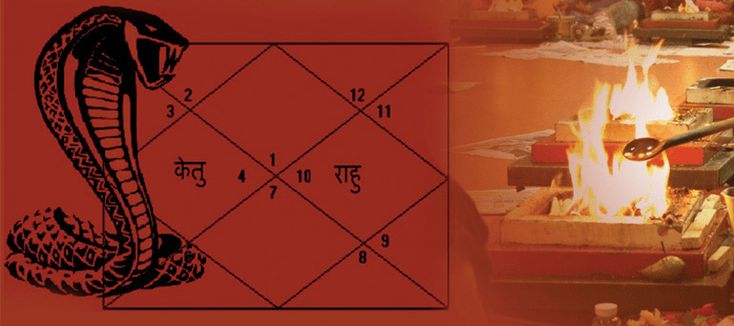
In the realm of Vedic astrology, Kaal Sarp Dosh is considered a formidable celestial affliction that can significantly influence an individual’s life. The term “Kaal Sarp” translates to “serpent of time,” and its dosh, or affliction, is believed to occur when all planets align within the arc of Rahu and Ketu, the lunar nodes.
This alignment is said to exert malefic influences on various aspects of life, leading to challenges and obstacles.
However, through the performance of Kaal Sarp Dosh Puja, devotees seek to mitigate these adverse effects and unlock a path towards harmony, prosperity, and spiritual growth.
So, the kaal sarp dosh puja benefits include harmony and spiritual solace which will help you in having a peaceful life
Kaal Sarp Dosh Briefs
Kaal Sarp Dosh manifests in several forms, depending on the positioning of Rahu and Ketu in the birth chart. These variations include Anant Kaal Sarp Dosh, Kulik Kaal Sarp Dosh, Vasuki Kaal Sarp Dosh, and others, each with its unique implications.
Individuals affected by Kaal Sarp Dosh may experience setbacks in careers, relationships, health, and overall well-being. The dosh is believed to amplify negative karmic influences from past lives, leading to recurring challenges and obstacles in the present.
The Significance of Kaal Sarp Dosh Puja
Kaal Sarp Dosh Puja holds immense significance in Hindu spirituality, offering devotees a powerful means of appeasing the cosmic forces associated with Rahu and Ketu.
The puja is typically performed by experienced priests or astrologers who meticulously conduct rituals to invoke divine blessings and neutralize the adverse effects of the dosh.
Through sacred chants, offerings, and prayers, participants seek divine intervention to alleviate suffering and usher in positive transformations in their lives.
The Rituals for Kaal Sarp Dosh Puja Benefits
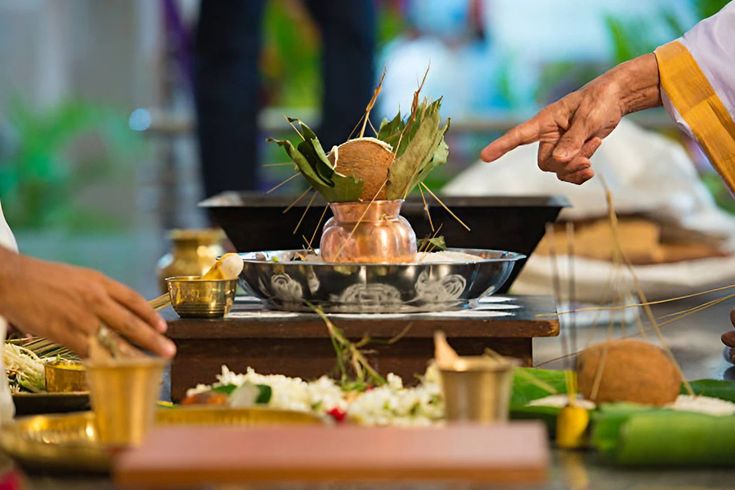
The rituals of Kaal Sarp Dosh Puja vary depending on regional traditions and personal preferences. However, common elements include the recitation of Vedic mantras, offerings of flowers, fruits, and sacred substances, and the lighting of oil lamps to symbolize the dispelling of darkness. The puja is often performed in holy sites, temples, or designated spaces conducive to spiritual practices, fostering an atmosphere of devotion and reverence.
The Transformative Kaal Sarp Dosh Puja Benefits
Kaal Sarp Dosh Puja is believed to bestow a multitude of benefits upon devotees who undertake this sacred practice with sincerity and faith:
Mitigation of Malefic Influences: By appeasing Rahu and Ketu, the puja helps neutralize the adverse effects of Kaal Sarp Dosh, thereby alleviating hardships and obstacles in various aspects of life.
Enhanced Spiritual Growth: Through devout participation in the puja rituals, individuals may experience heightened spiritual awareness and a deeper connection with divine energies, facilitating personal growth and enlightenment.
Promotion of Prosperity: The blessings obtained from Kaal Sarp Dosh Puja are said to pave the way for financial stability, career success, and overall prosperity, enabling individuals to fulfil their material aspirations.
Harmonious Relationships: The puja’s positive vibrations can foster harmony and understanding in interpersonal relationships, resolving conflicts and fostering mutual respect and affection.
Conclusion
In conclusion, Kaal Sarp Dosh Puja Benefits offers a transformative spiritual journey for individuals seeking relief from the malefic influences of planetary alignments. Through the performance of sacred rituals and heartfelt devotion, devotees can unlock profound benefits, including enhanced spiritual growth, prosperity, and harmonious relationships. By understanding the significance of this ancient practice and embracing its rituals with faith and reverence, one can navigate life’s challenges with grace and fortitude. Contact Pandit Shivesh ji Maharaj for better results who has more than 25 years of experience in performing the kaal sarp dosh puja.
FAQs (Frequently Asked Questions)
What is Kaal Sarp Dosh?
Kaal Sarp Dosh is a malefic astrological condition that occurs when all planets align within the arc of Rahu and Ketu, exerting adverse influences on various aspects of life.
How does Kaal Sarp Dosh Puja work?
Kaal Sarp Dosh Puja involves sacred rituals and prayers performed to appease Rahu and Ketu, seeking their blessings to neutralize the negative effects of the dosh and usher in positive changes.
Who should perform Kaal Sarp Dosh Puja?
Individuals experiencing challenges and obstacles in life, attributed to the presence of Kaal Sarp Dosh in their birth charts, can benefit from performing this puja.
Where can Kaal Sarp Dosh Puja be performed?
Kaal Sarp Dosh Puja can be performed in temples, sacred sites, or at home under the guidance of experienced priests or astrologers proficient in Vedic rituals.
Is Kaal Sarp Dosh Puja Benefits Effective?
While the efficacy of the puja may vary for individuals, devout participation with sincere intentions is believed to yield positive results and alleviate the impact of the dosh.
How often should Kaal Sarp Dosh Puja be performed?
The frequency of performing the puja depends on individual circumstances and astrological consultations, with some practitioners recommending annual observance for sustained benefits.